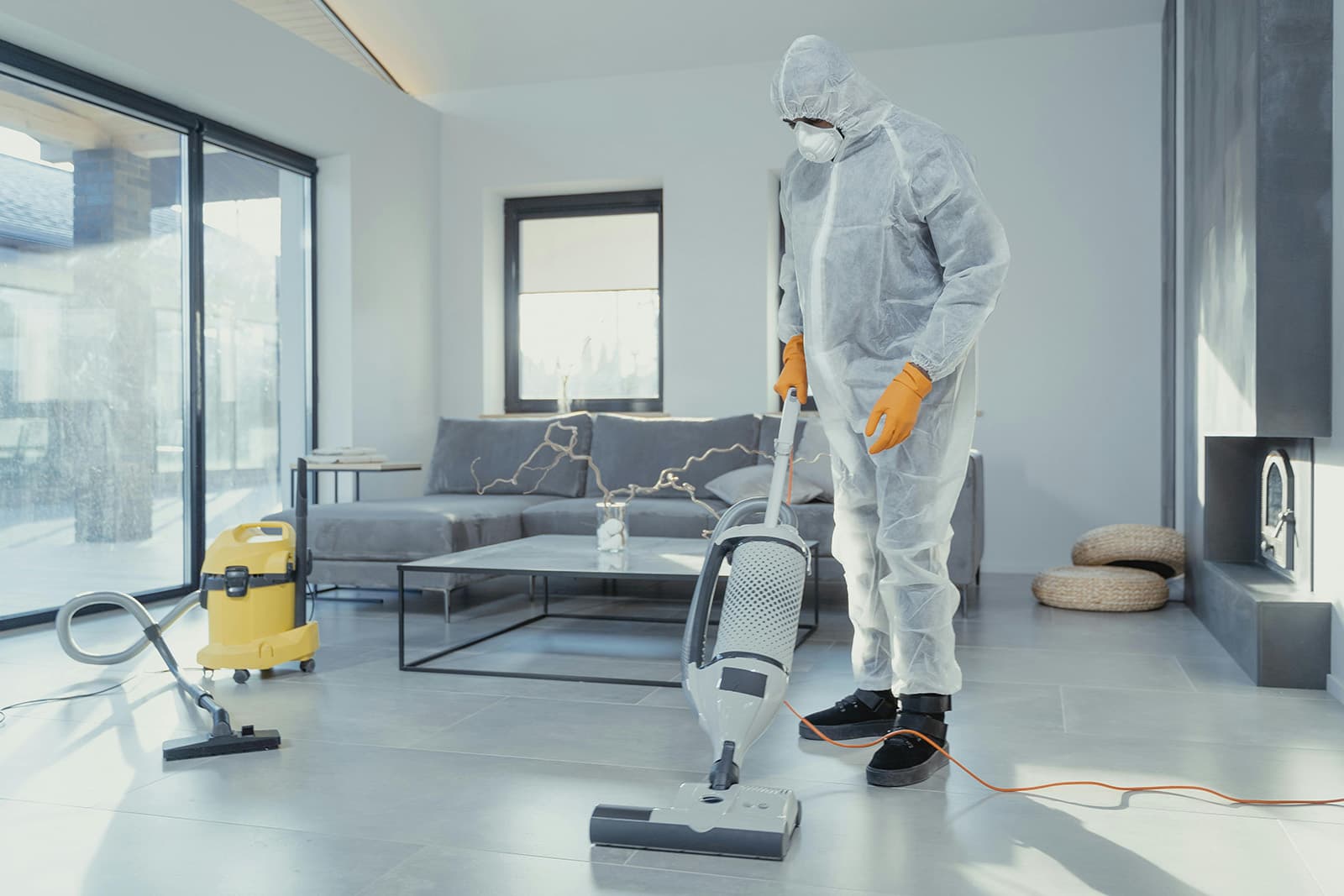
We'll tell you straight: not every mold situation requires a professional. A small patch of surface mold on bathroom tile can often be cleaned safely by a careful homeowner. But "mold removal" and "wiping mold off a surface" are not the same thing — and the line between what's manageable at home and what requires certified remediation is more specific than most people realize.
The Official Threshold: 10 Square Feet
Health Canada and the US EPA both recommend professional remediation for any mold-affected area exceeding 10 square feet (roughly 1 square meter). This threshold exists because larger infestations typically indicate a systemic moisture problem, are more likely to involve hidden mold beyond the visible patch, and pose a meaningful risk of spreading spores to other areas of the home during removal.
Ten square feet is smaller than you probably think — it's roughly the size of a standard bathroom door. If the affected area is bigger than that, or if you're uncertain about the extent, professional assessment is the appropriate starting point.
When DIY Is Reasonable
- Visible mold on non-porous surfaces: bathroom tile, glass, metal, or sealed countertops — provided the area is under 10 sq ft
- Mold on grout lines in an otherwise dry bathroom, where the underlying drywall is not compromised
- Mold on the underside of a bathroom exhaust fan cover or vent grate
- Light mold on a window sill or frame where condensation is the clear cause and the frame is undamaged
Why Bleach Doesn't Work on Most Mold
This is the most important thing to understand about DIY mold removal: bleach is ineffective on porous materials like drywall, wood, grout, and concrete.
Bleach is approximately 90% water. When you apply it to a porous surface, the chlorine evaporates off the surface quickly while the water penetrates the material — which can actually feed the mold colony beneath the surface. You may bleach the visible mold white, creating the appearance of clean, while the colony underneath is undisturbed and still actively growing.
For non-porous surfaces (tile, sealed countertops, glass), bleach is effective. For any porous material, the appropriate products are detergent-based cleaners, followed by a biocide specifically rated for mold (such as hydrogen peroxide-based products) if surface mold persists. Physical removal — not chemical treatment — is what eliminates mold in porous materials.
When You Must Hire a Professional
Area exceeds 10 square feet
Beyond the Health Canada threshold, large infestations require HEPA containment to prevent cross-contamination, professional-grade HEPA air scrubbers running during and after work, and disposal of contaminated materials in sealed bags according to BC hazardous waste requirements.
Mold is inside wall cavities, attic, or crawl space
Hidden mold is the most common scenario we handle in Surrey. If you smell mold but can't see it, if there's been past water damage behind walls, or if you have visible staining on drywall, there is almost certainly mold growth inside the cavity. Accessing wall cavity mold requires controlled demolition, full containment, and professional disposal — this is not a DIY situation.
Mold is in HVAC systems or ductwork
This is a categorical must-hire scenario. Mold inside ductwork can distribute spores to every room in the home every time the system runs. Duct mold remediation requires specialized equipment, biocide treatment of the full duct system, and post-remediation air quality testing. Attempting to clean ducts without proper equipment typically makes the situation worse.
The mold followed water damage or flooding
Water damage events — burst pipes, appliance failures, flooding — almost always involve saturation of building materials behind walls and under floors. The visible mold is typically only a fraction of what has grown in the wet building materials. A professional assessment with moisture meters and sometimes infrared imaging is required to understand the true scope.
Household members are symptomatic
If anyone in the home has been experiencing respiratory symptoms, allergic reactions, or other health effects that may be mold-related, professional remediation with post-remediation clearance testing is required — not just to resolve the mold problem, but to document that the environment has been returned to safe levels.
What Professional Mold Remediation Actually Includes
Understanding what you're paying for helps calibrate the decision. Certified mold remediation from Surrey Mold Removal includes: on-site assessment and moisture investigation, written fixed-price scope of work, full HEPA containment of the affected zone, negative air pressure during work to prevent cross-contamination, physical removal and disposal of contaminated materials (where required), antimicrobial treatment of affected surfaces, HEPA vacuuming of the work area, and coordination of independent post-remediation clearance testing. We also address the moisture source — because without that, the mold returns.
The Clearance Testing Requirement
This is the element most homeowners don't think about. Post-remediation clearance testing — conducted by a third party, not the remediator — is what confirms the work was actually successful. Air samples are sent to an accredited laboratory, and results confirm that spore counts have returned to acceptable baseline levels. Without clearance testing, you have no objective evidence the remediation worked. Surrey Mold Removal always coordinates independent clearance testing as part of every remediation scope.
Frequently Asked Questions
I cleaned the mold with bleach and it came back. Why?
Can I use a mold test kit from a hardware store?
I painted over the mold. Is that sufficient?
My mold is in the basement — can I just keep the dehumidifier running?
Ready to get a written quote from Surrey Mold Removal?
On-site assessments available same-day or next-day across Surrey and Metro Vancouver. Written fixed-price quotes — no surprises.